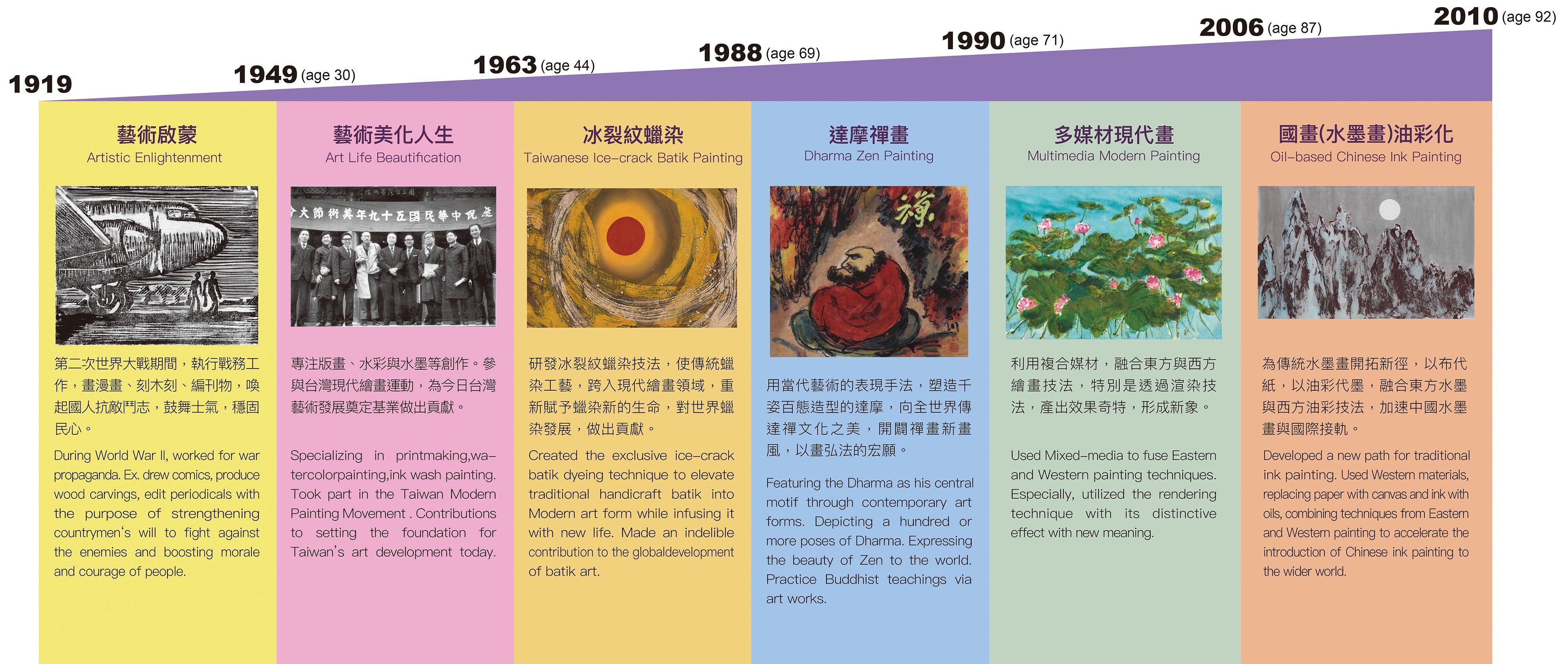
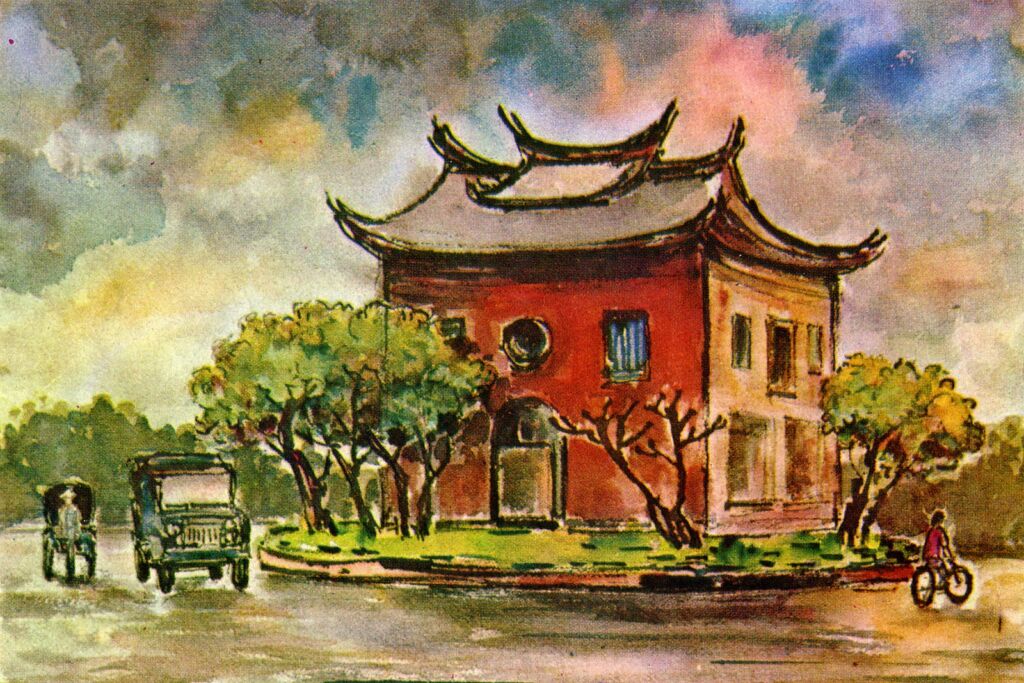
1937 : at the age of eighteen, during World War II, Huang contributed to his country through non-military service by participating in “the Short-Term Wartime Teacher Training Program” established by the Fujian Provincial Department of Education. Upon completion, he conducted province-wide tours to promote wartime life education. Subsequently, through artistic practices including cartoons, woodcut prints, periodical editing, and theatrical writing and direction, he helped inspire resistance against the enemy, boost public morale, and stabilize social sentiment.
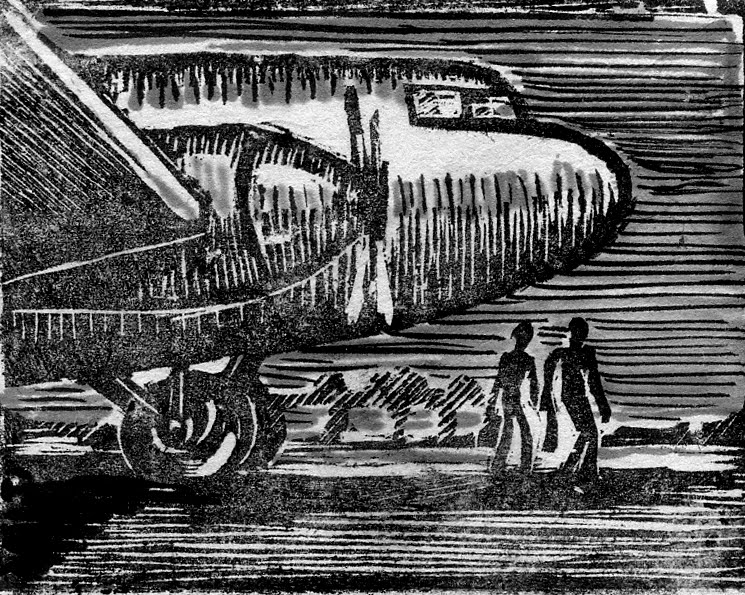
Since 1948 : Started to create artworks of watercolor painting, ink and wash painting, oil painting and photography. His artworks were printed in all major daily Taiwanese and Hong Kong newspapers and magazines.
1948年起,創作水彩畫、水墨畫、漫畫、攝影等作品,於香港與台灣雜誌上發表,崛起於台灣藝壇。
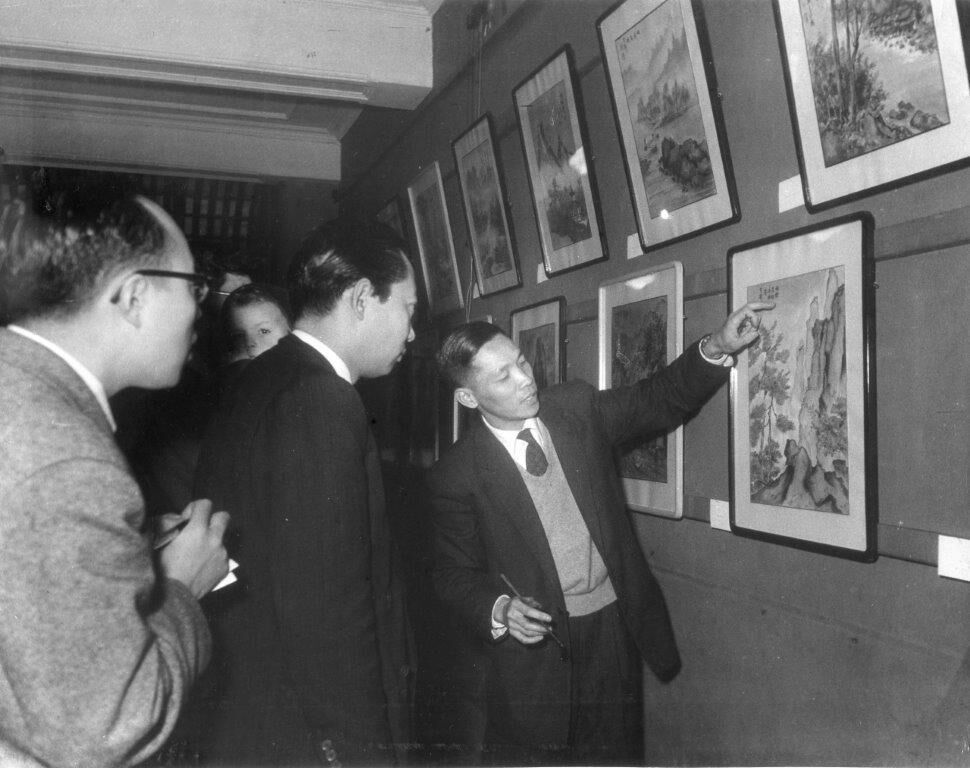
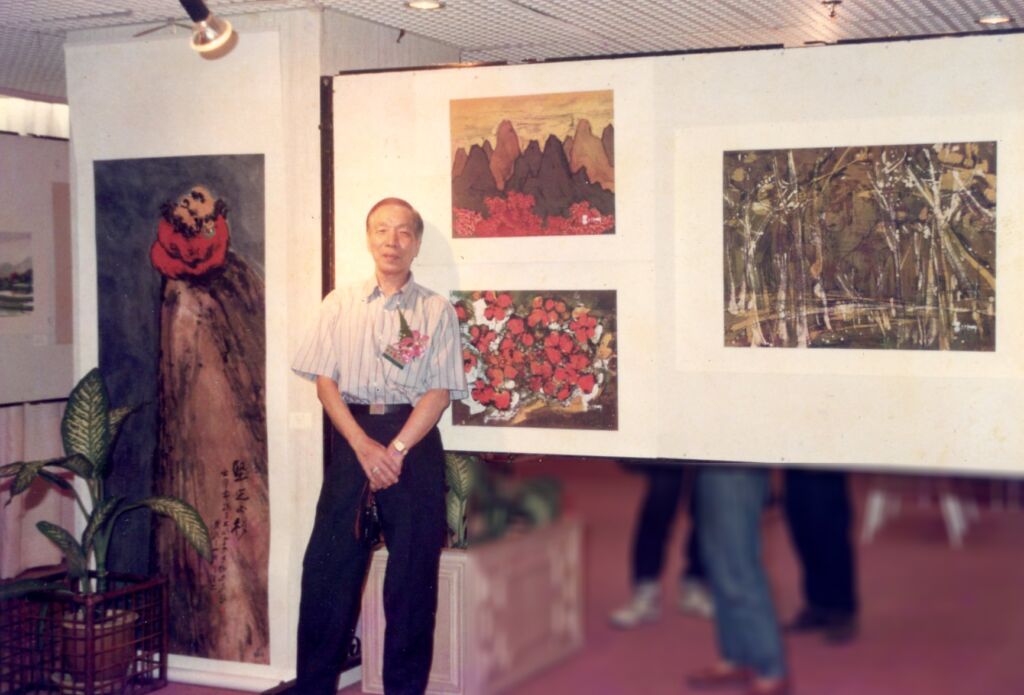
1955 : Held his first solo exhibition in Taiwan at the China Institute in America. The United States Information Service interviewed Huang and widely distributed the news overseas which caused a sensation in Taiwan’s art circle at the time.
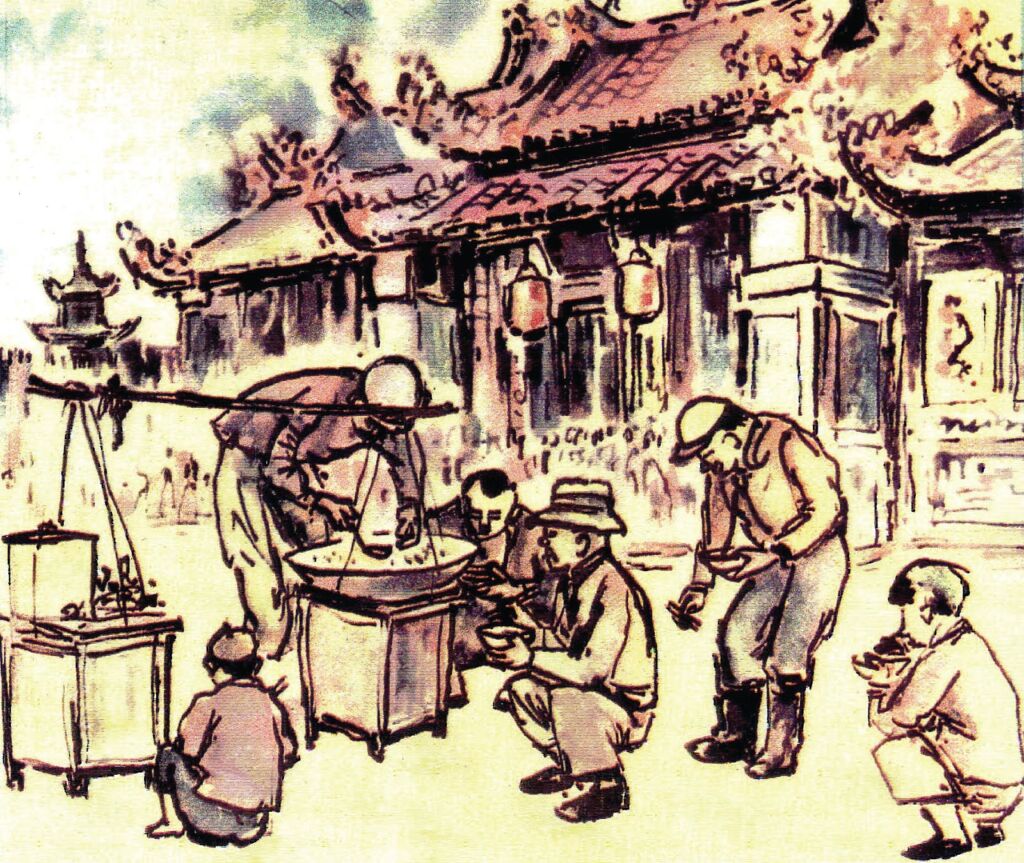
1957 : Published “Comics Collection on Taiwan Life”. His work, “Food stalls in front of the Longshan Temple”, was printed in color in The Young Companion, a Hong Kong pictorial magazine.
1957年,發表「台灣生活漫畫專集」《龍山寺廟前,地攤飲食》,刊登於香港《良友畫報》彩色版。
戰後藝文運動的推手 An Important force in Taiwan Modern Painting Movement
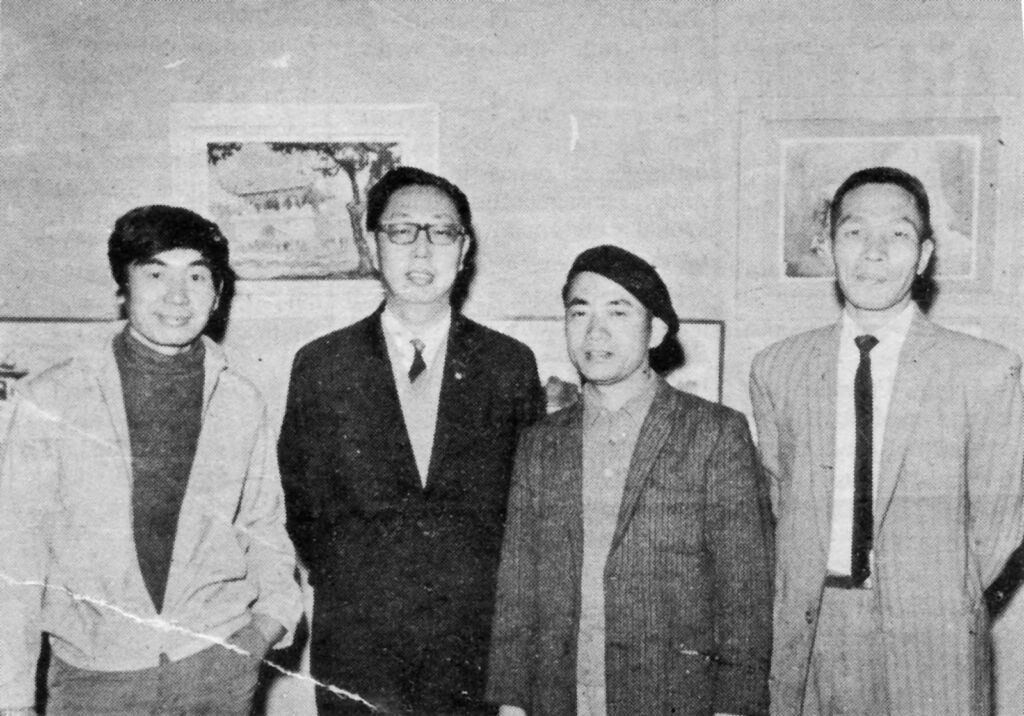
1959 : Together with Lan Wang, Ze-ban Li, De-jin Xi and others, Huang co-founded “the Chinese Watercolor Painting Society”, serving as a founding member and editor-in-chief of the special volume “Chinese Watercolor Painting Circles”. 1967: The participating watercolor society artists were photographed together; from right to left: Ko-chuan Huang, Jie Zhang, Lan Wang, and De-jin Xi.
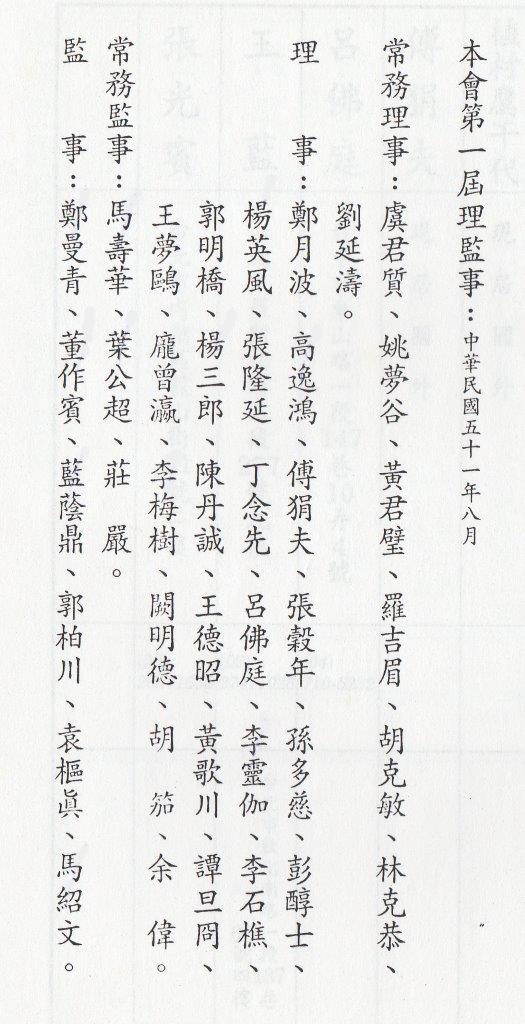
1963 : Co-founded “the Art Society of the Republic of China” (still active today) with Shou-hua Ma, Meng-gu Yao, Chuan-fu Fu, Jun-bi Huang, Kung-chao Yeh, Ying-feng Yang, and others. He was elected Director and Deputy Secretary-General of the Society.
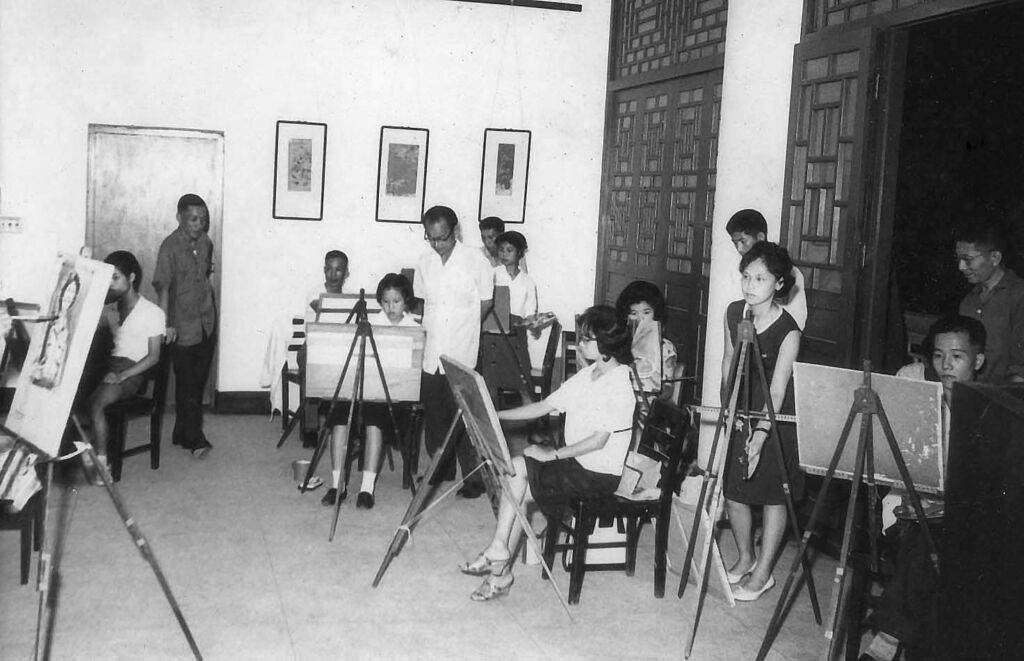
1963 : Served as the art class director of “The Art Society of R.O.C.). The art class took place in the National Museum of History. Standing on the far left of the picture is Ko-chuan Huang.
1963 : Invited by the Japan-China Artist Friendship Association to attend the “The Republic of China Modern Art Exhibition” at the Tokyo Metropolitan Art Museum.
1963年,國立歷史博物館與日華美術交友會之邀,參加中華民國現代美術作品展,於日本東京都美術館。
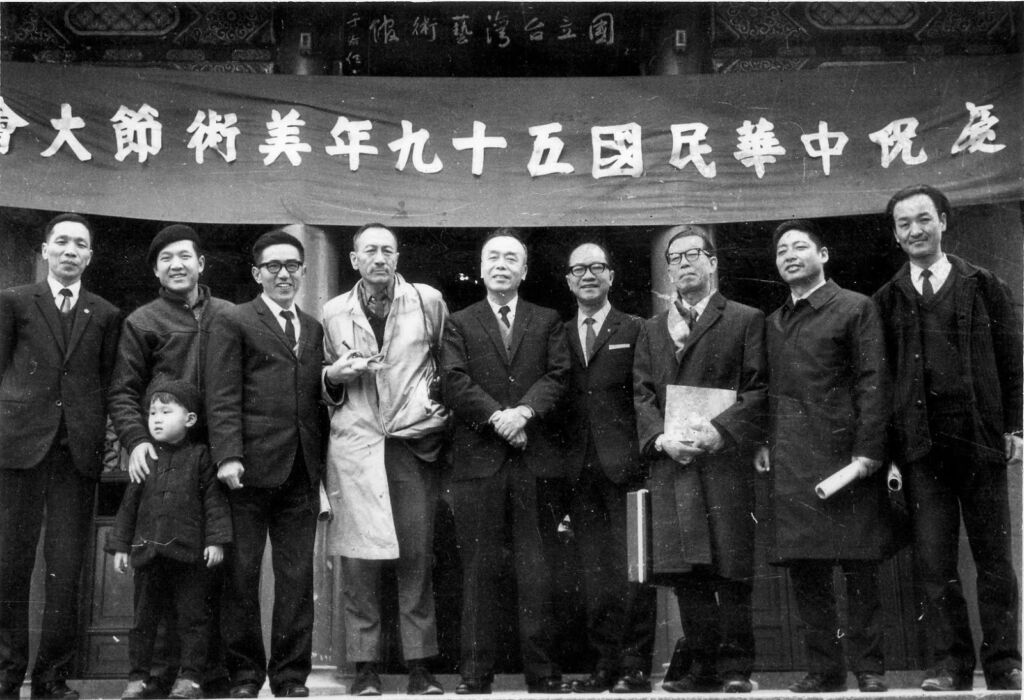
1970: Attended the National Arts Festival hosted by the National Center of Arts. From left to right in the photograph: Ko-chuan Huang, Che-fu King, Tao-cheng Kuo, Chi-wei Liu, Men-gu Yao, Hong Xiang, Yan Hu, Kuo-ching Deng, Leh-chin Hsu.
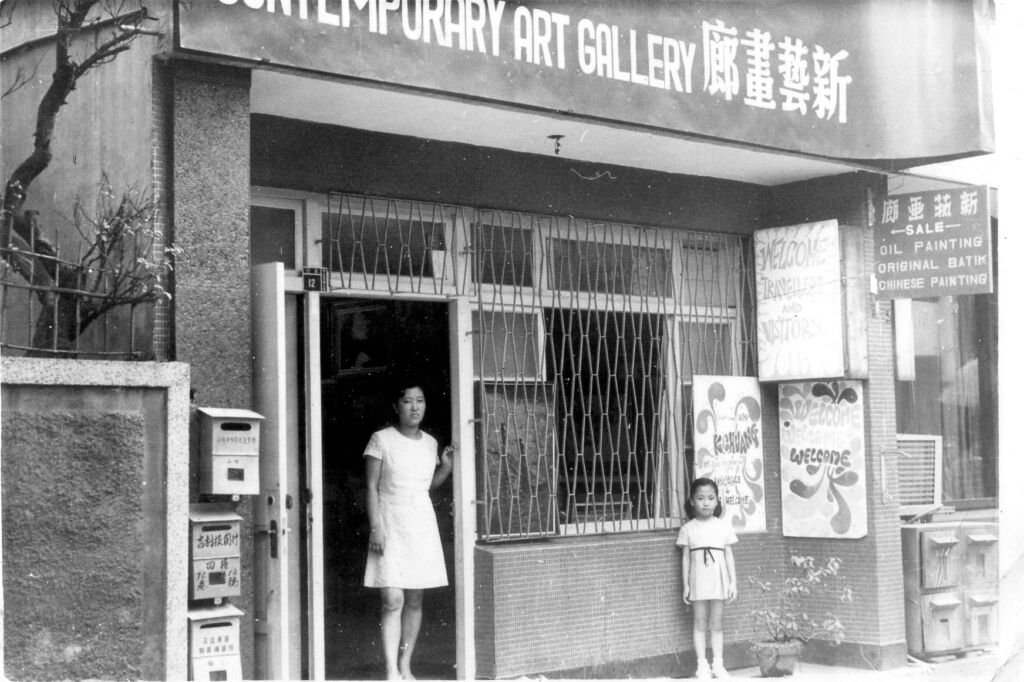
1971 : To assist artists in securing opportunities for survival and career development, and to promote Taiwanese art overseas, he established a gallery on Zhongshan North Road—an area frequented by international tourists and U.S. military advisers stationed in Taiwan.
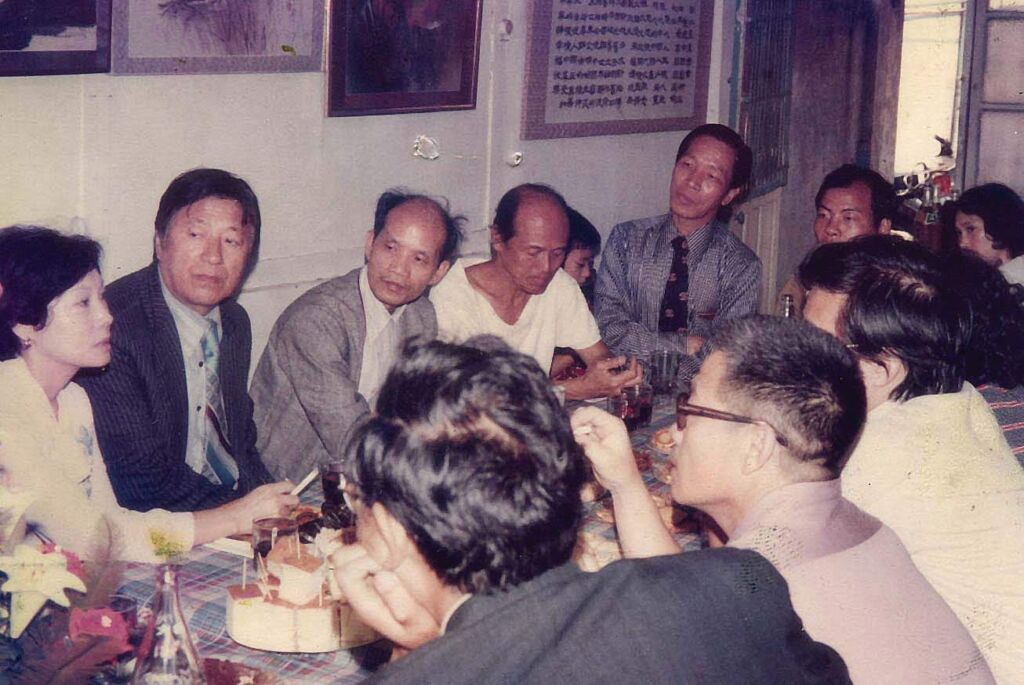
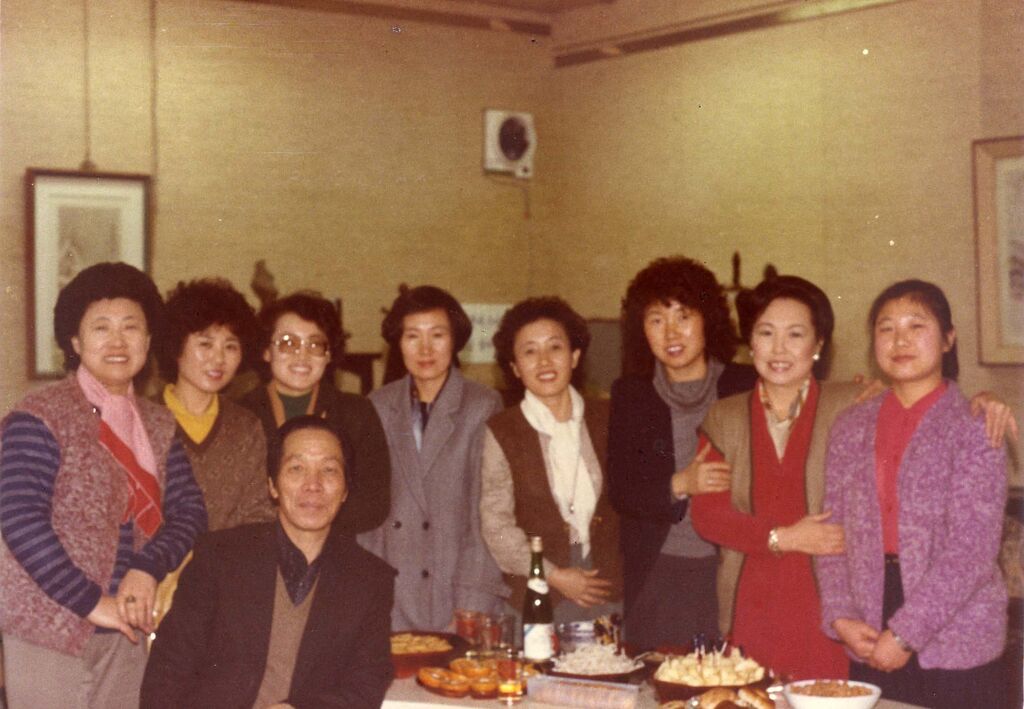
1978 : The Ink-and-Wash Painting Society of China hosted a reception tea party to welcome Hong Kong film star and painter Carrie Mei Koo to Taiwan. From right to left in the photograph: Ko-chuan Huang, Ting-shi Chen, Shan-xi Zhen, Huan-su Yu, and Carrie Koo Mei.
1978年,水墨畫會設茶會,右起黃歌川、陳庭詩、鄭善禧、于還素、港星兼畫家顧媚女士等。
Taiwanese Ice-crack Batik Painting 冰裂紋蠟染誕生
1963 (age 44)~ 1963年 (44歲)~
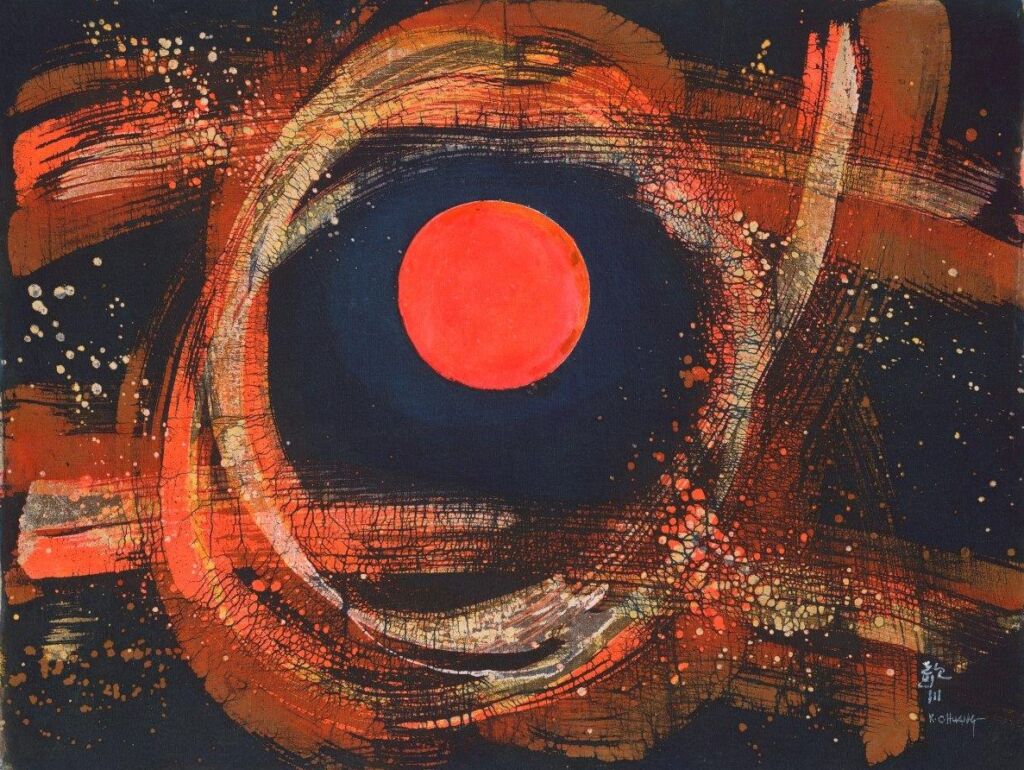
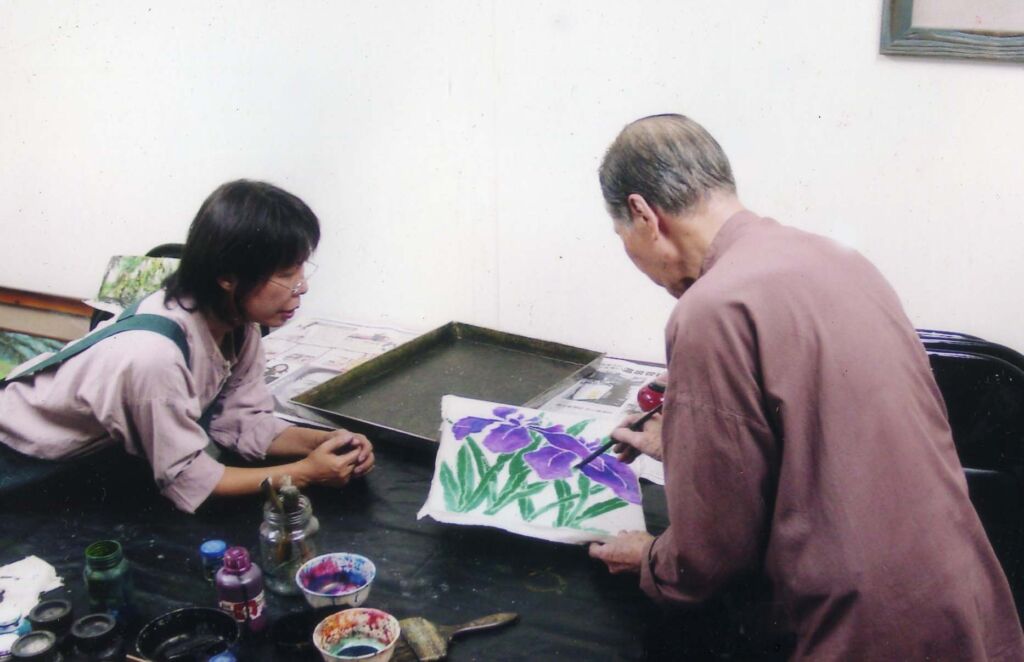
1963 : Developed Ice-crack Batik Painting as a new wax-resist dyeing technique. Huang elevating traditional handicraft batik into modern art forms while infusing it with new life.
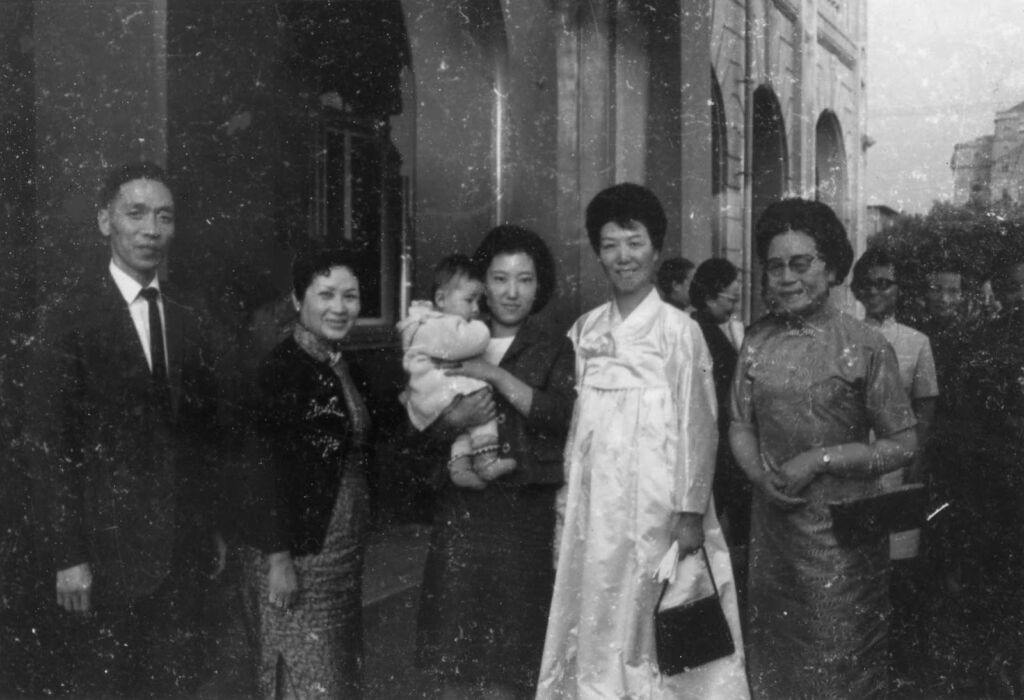
1966 : Met with the First Lady of the South Korean President Chung-hee Park (also the mother of South Korean President Geun-hye Park): Ms. Young-soo Yuk. In the picture are Ms. Yuk (second from the right), Huang (first from the left), Huang’s wife and their one-year-old baby daughter (third from the left).
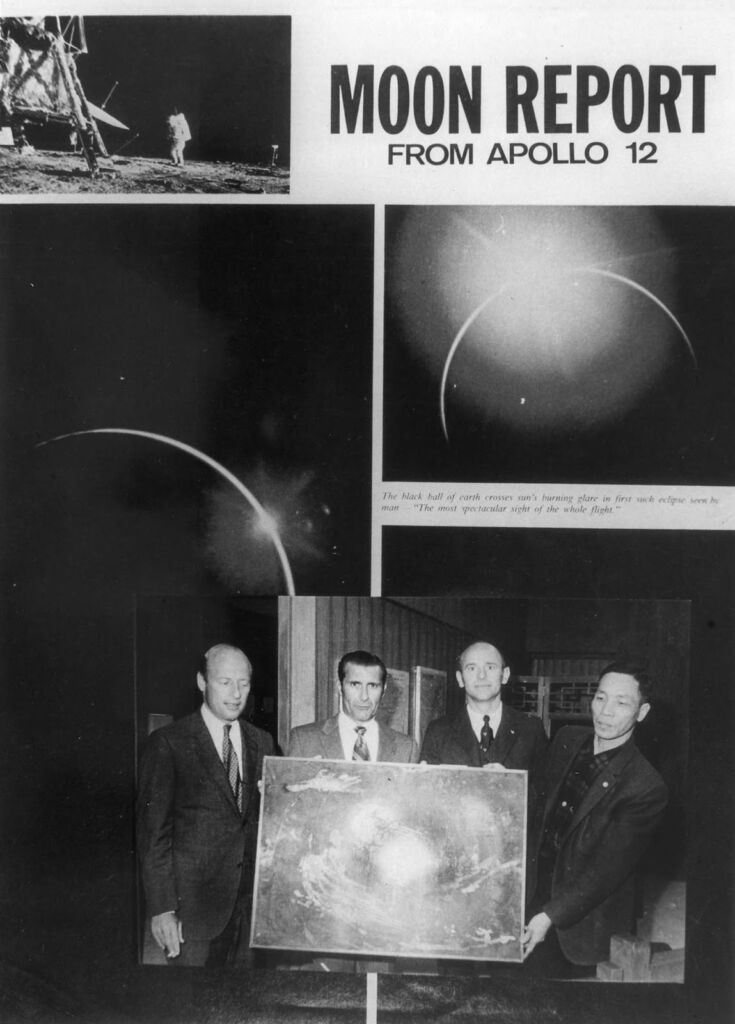
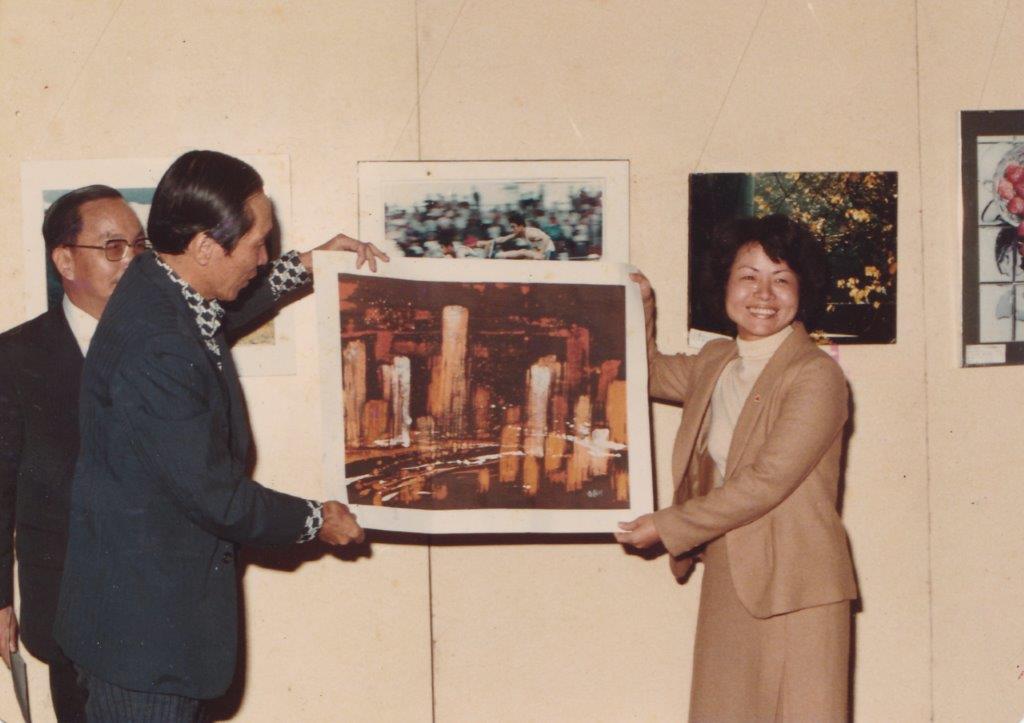
1970 : During the U.S.–Soviet Cold War, Taiwan, as an ally of the United States, hosted the Apollo 12 astronauts on a visit to strengthen diplomatic and friendly relations at the direction of U.S. President Nixon. Huang presented his batik artwork to the astronauts and to NASA (the U.S. National Aeronautics and Space Administration)”
*NOTE: Apollo 11 was the spaceflight that first landed humans on the Moon. Apollo 12 was the second to land on the Moon.
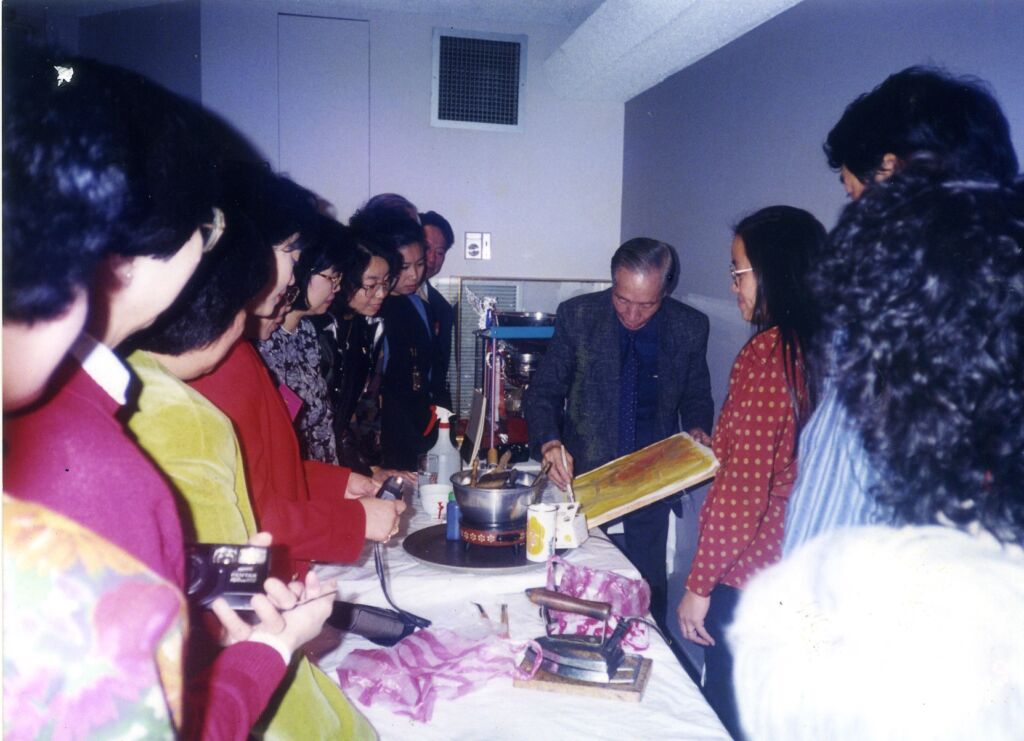
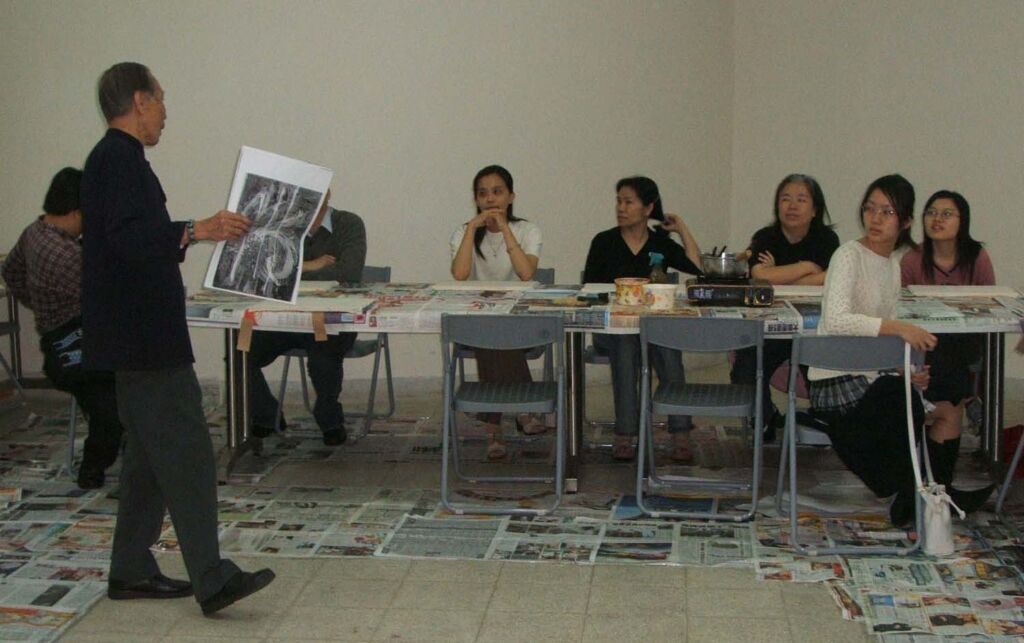
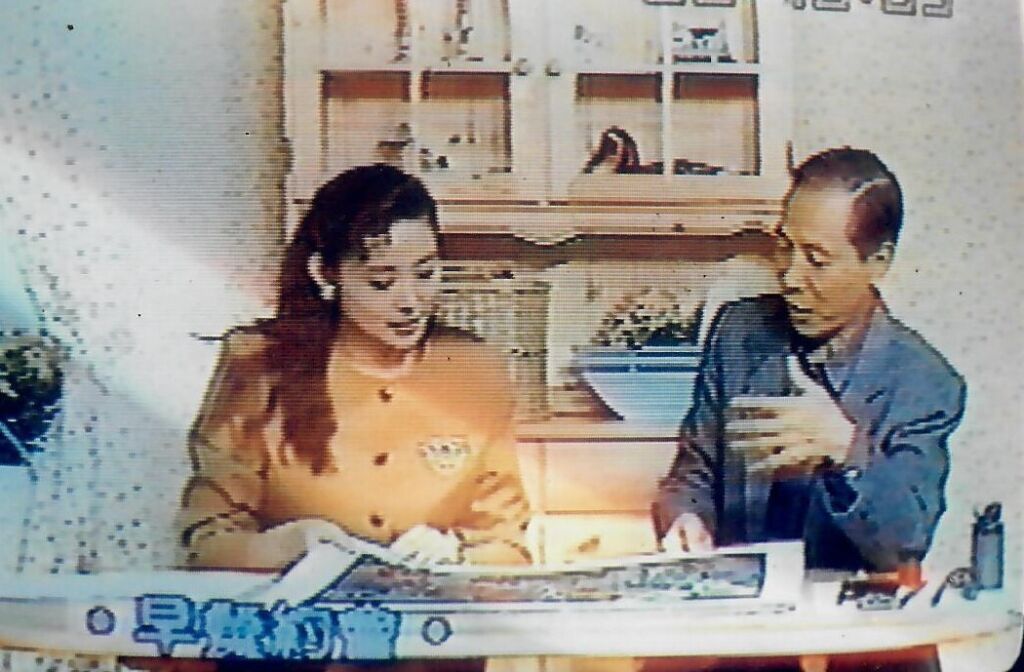
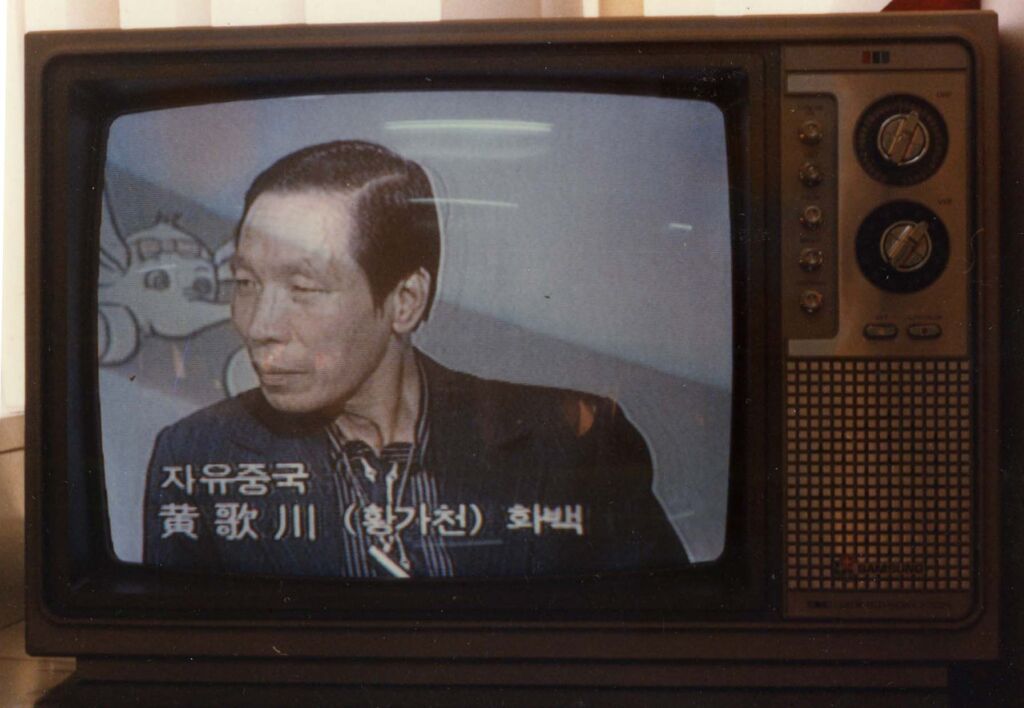
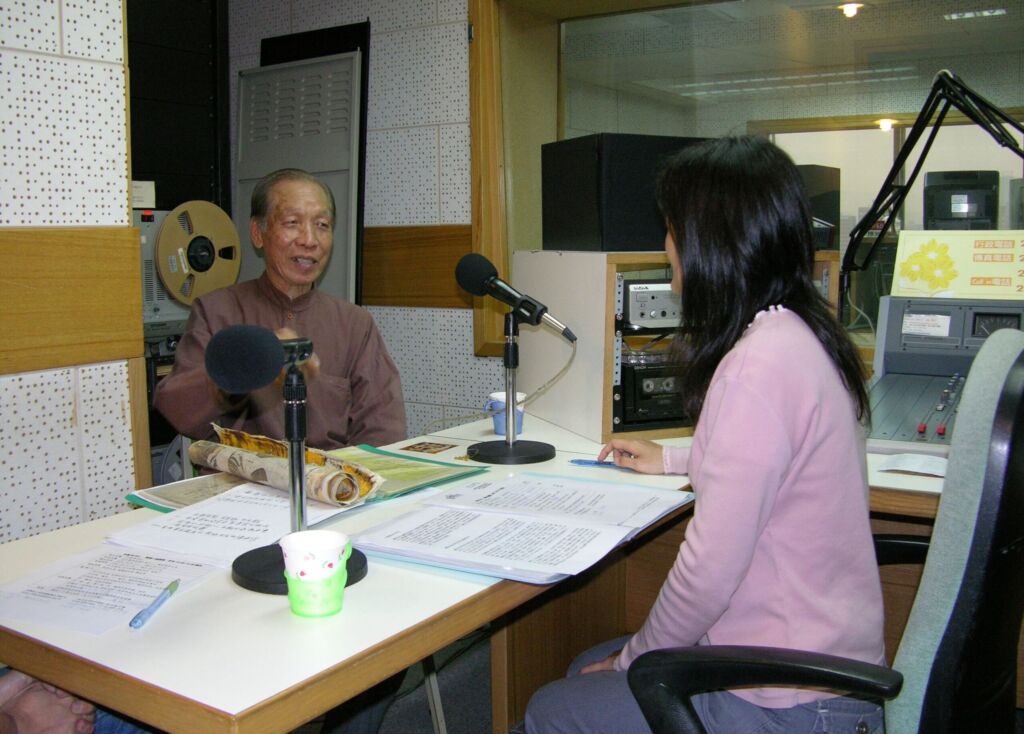
Since 1971 : established a Batik Research Center to promote batik art through domestic and international solo exhibitions, instructional courses(educational institutions and private organizations), and featured interviews on television and radio programs, as well as in newspapers and magazines.
1981 : Invited to Seoul, South Korea, to teach batik techniques at Ewha Womans University, and held solo exhibitions in Seoul and Jeonju.
1981年,應邀前往南韓漢城(首爾)梨花大學教授蠟染,並在漢城與全州舉辦個展。
Since 1986 : To carry out the “Culture Loving the Homeland” initiative, efforts began promoting batik paniting at local cultural centers in places such as Taichung, Miaoli, Yilan, Hualien, and Penghu.
1986年起,為實踐文化愛鄉, 前往台中、苗栗、宜蘭、花蓮、澎湖等地方文化中心推廣蠟染。
1987 : Solo Exhibition: “Sacred Batik Art,” held at the Catholic Huaming Gallery, featuring batik works reverently depicting stories from the Bible.
1987年,於天主教華明畫廊舉辦「聖畫蠟染個展」,以蠟染恭繪聖經故事。
1992 & 2006 : Invited by overseas Chinese communities to Malaysia on two occasions to exhibit batik works and conduct instructional workshops.
1992年與2006年.應僑界之邀,兩次赴馬來西亞,展出蠟染、達摩作品,並舉辦蠟染教學。
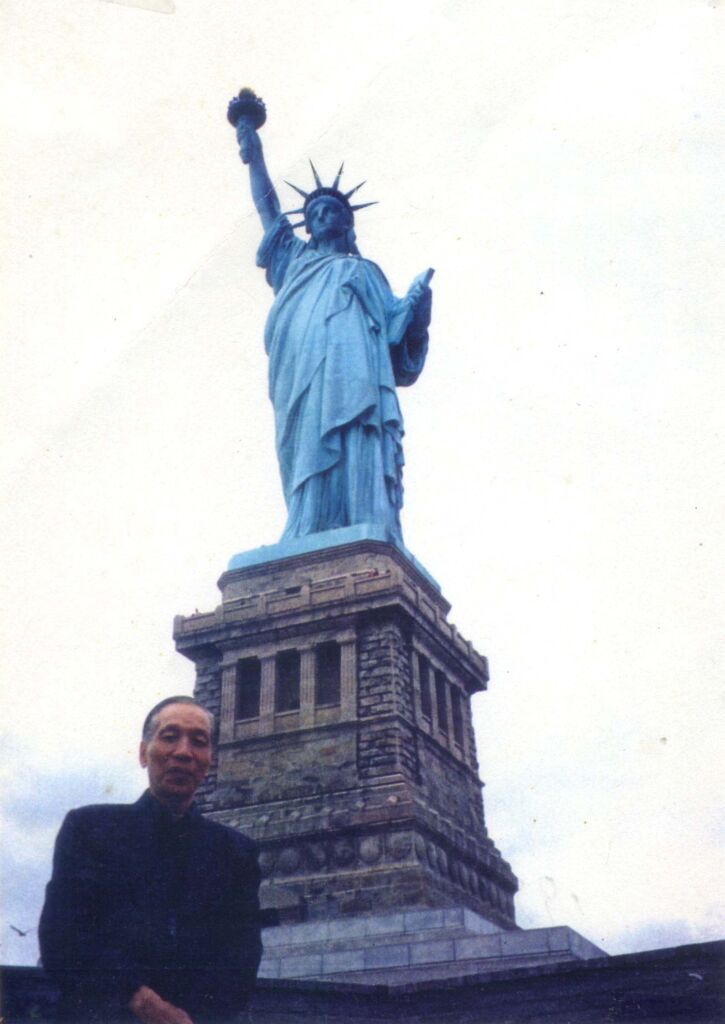
1994 : At the invitation of the Taipei Economic and Cultural Office in Canada, joined a delegation organized by the Chinese Modern Ink Painting Association to visit Canada, delivering a specialized lecture and a demostration on batik painting. En route via the United States, a commemorative photograph was taken at the Statue of Liberty in New York.
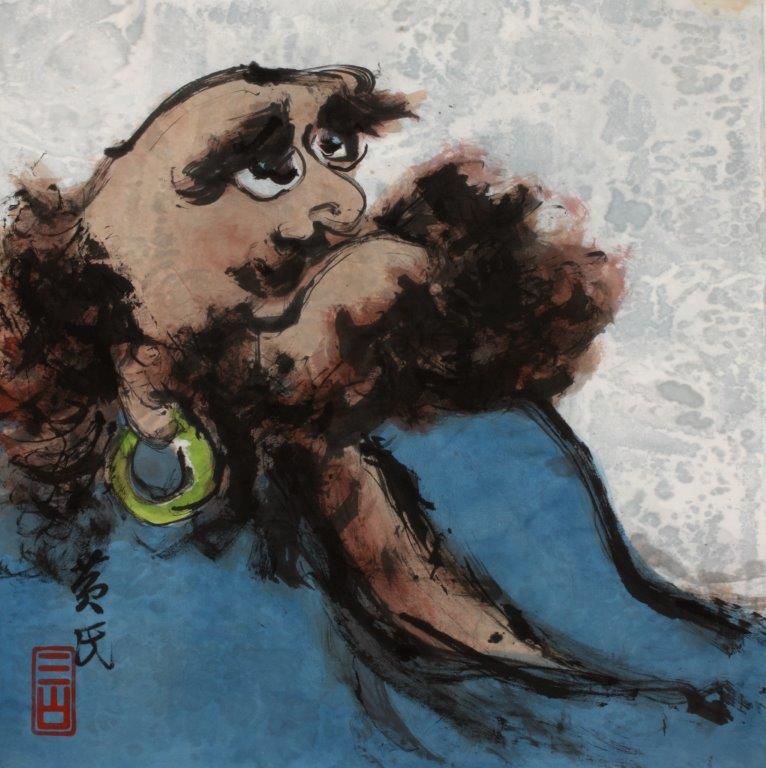
1988 : Published “Bodhidharma Zen Painting” artworks. Featuring the Dharma as his central motif through contemporary art forms. Depicting a hundred or more poses of Dharma. Expressing the beauty of Zen to the world. Practice Buddhist teachings via art works.
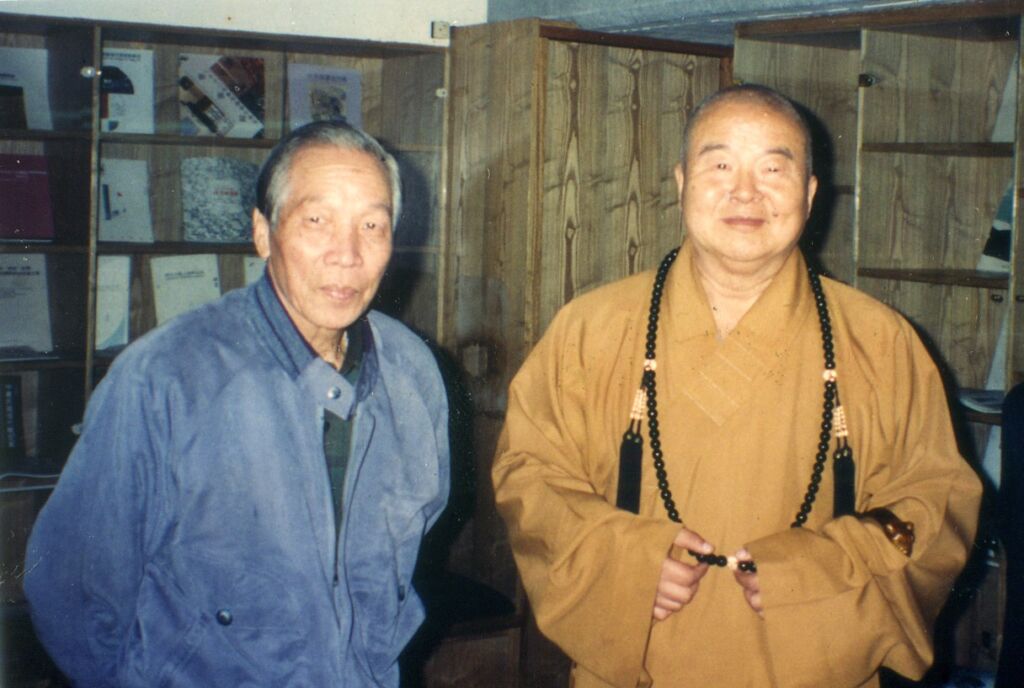
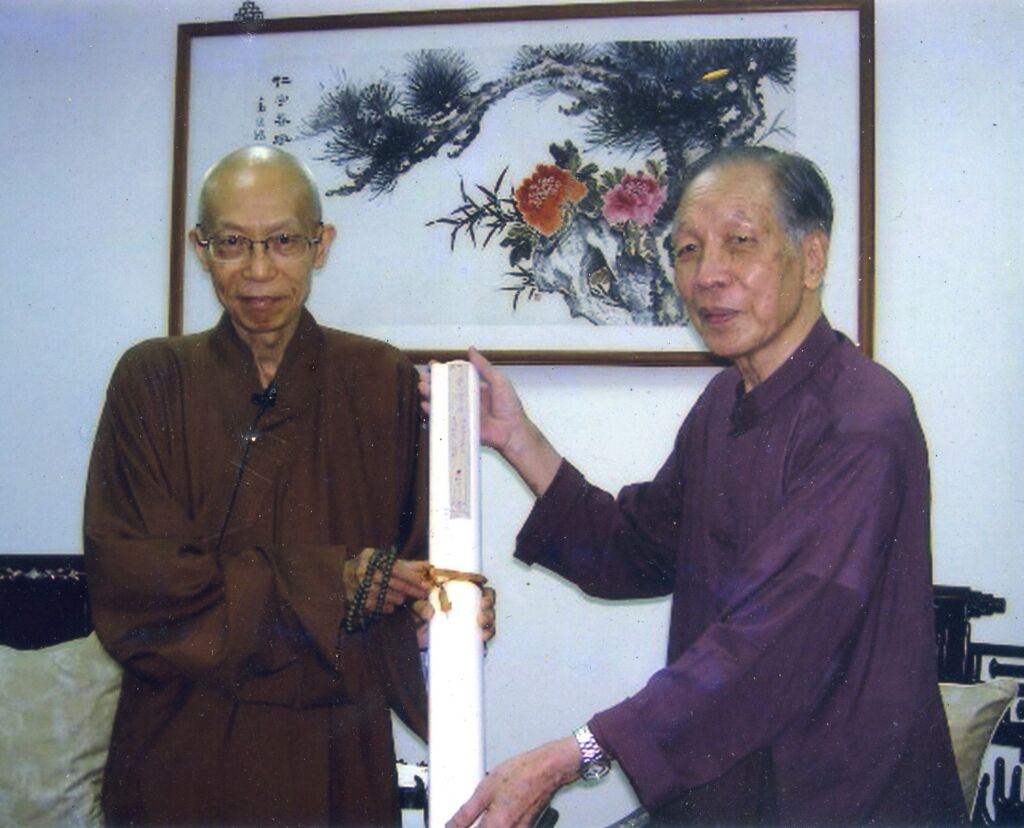
1993 : With Venerable Master Hsing Yun of Fo Guang Shan. In 2011, took refuge in Buddhism at Jinguangming Temple, receiving the Dharma name “Wenbo.”
1993年,與佛光山星雲大師合影。2011年,在金光明寺皈依佛門,法號「文伯」。
2003 : With Venerable Master Sheng Yen of Dharma Drum Mountain, donating Daruma artworks.
1981年,與法鼓山聖嚴法師合影,捐贈達摩作品。
Multimedia Modern Painting 多媒材現代畫
1990 (age 71)~ 1990年 (71歲)~
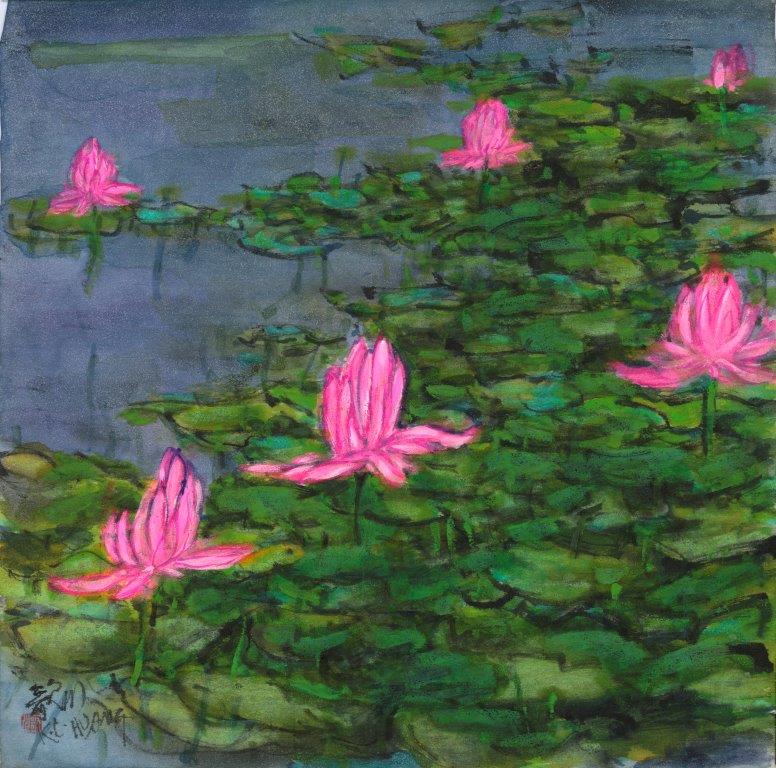
1990 : Developed “Multimedia Modern Painting”. Used Mixed-media to fuse Eastern and Western painting techniques. Especially, utilized the rendering technique with its distinctive effect with new meaning.
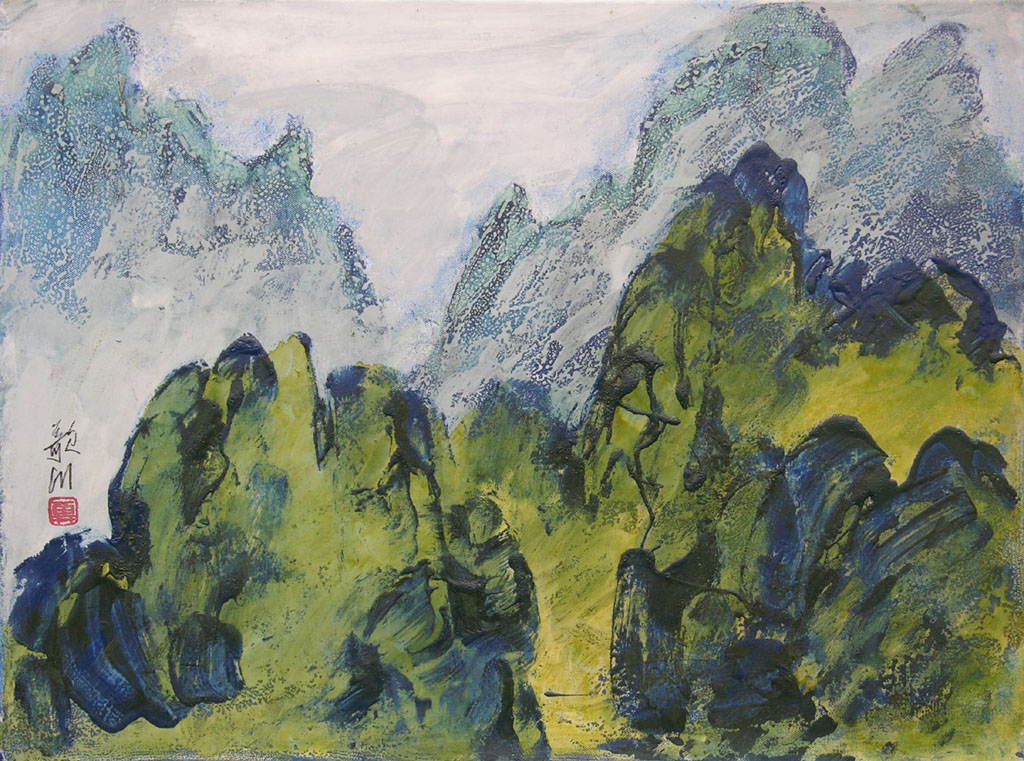
2006 : Started to produce Oil-based Chinese ink-and-wash painting, bringing his career to another peak. Developed a new path for traditional ink painting. Used Western materials, replacing paper with canvas and ink with oils, combining techniques from Eastern and Western painting to accelerate the introduction of Chinese ink painting to the wider world.
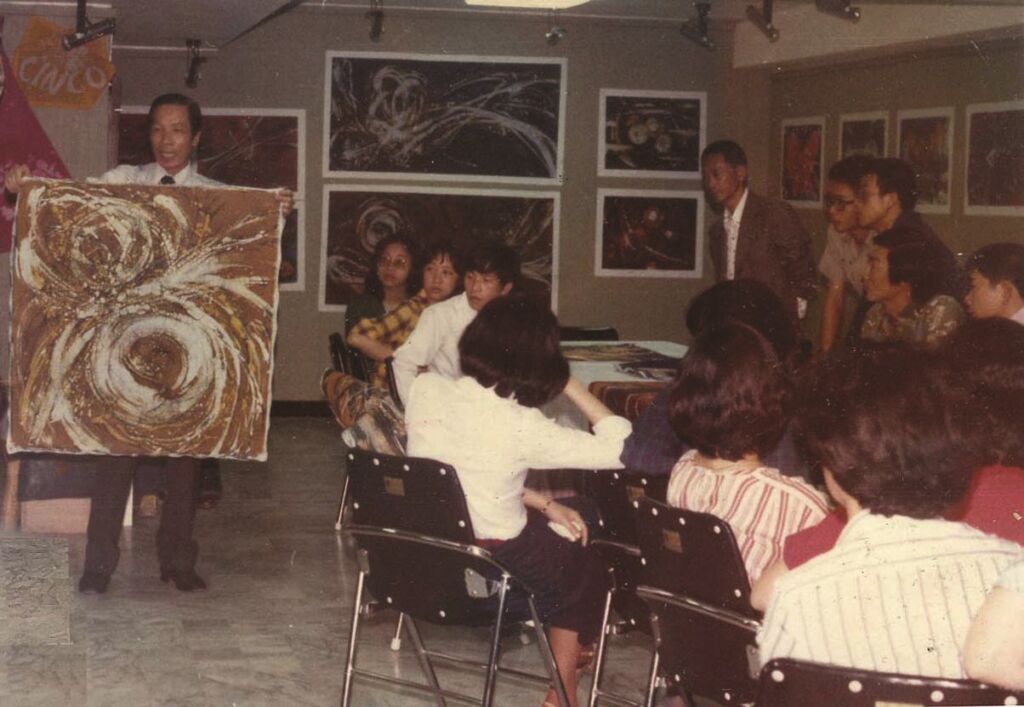
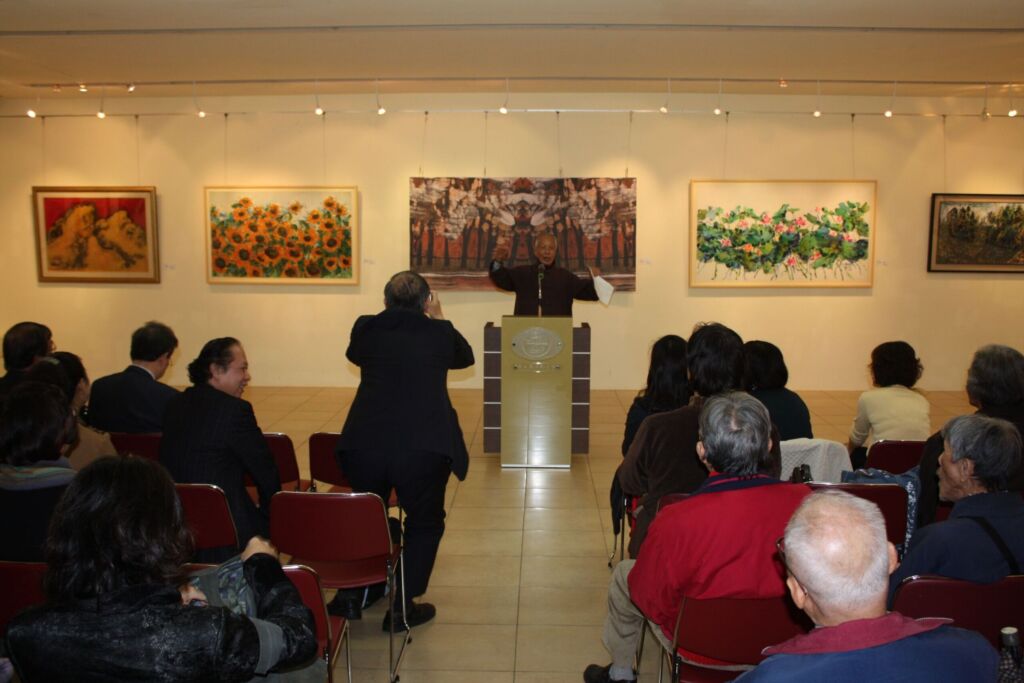
2009 : at the invitation of the National Dr. Sun Yat-sen Memorial Hall, the artist presented a solo exhibition (left photo).
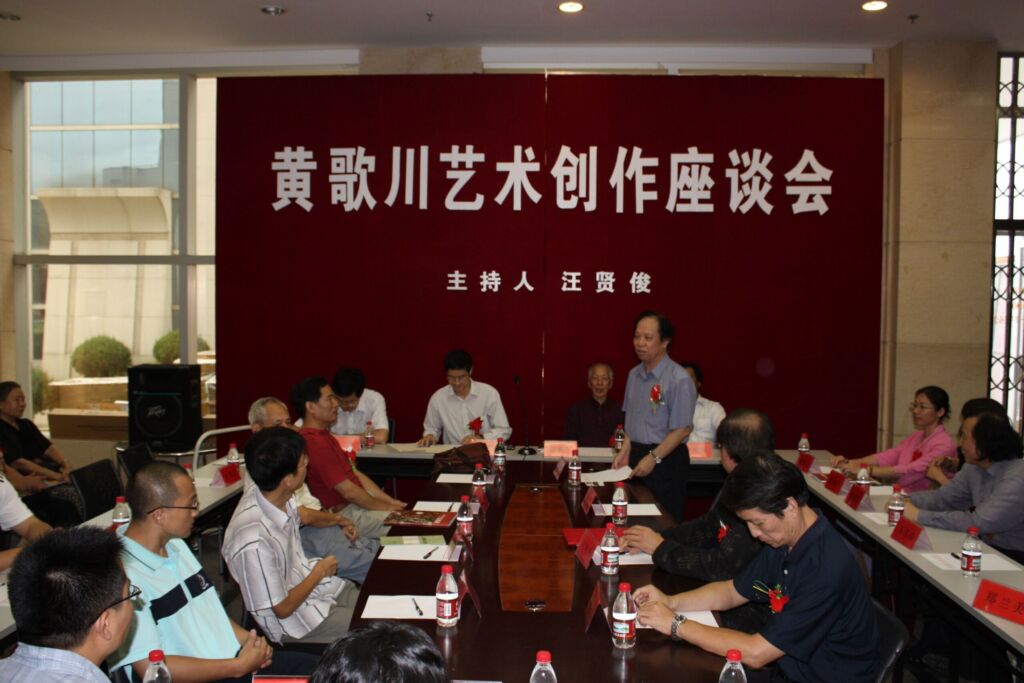
In the same year, invited by the Fujian Provincial Art Museum, he returned to his hometown for the first time in sixty years, where he held a solo exhibition and participated in an artist talk (right photo).